


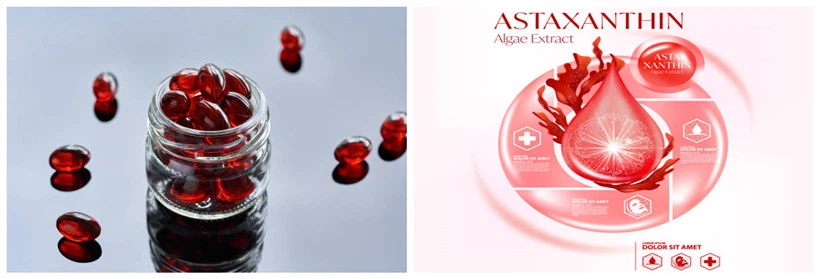
Algal astaxanthin is a naturally occurring red ketocarotenoid, derived from algae, and is currently the only natural red ketocarotenoid known to cross the blood-brain barrier. It is also considered a fourth-generation natural antioxidant. Algal astaxanthin exhibits antioxidant activity that is 6,000 times higher than vitamin C, 1,000 times higher than vitamin E, 200 times higher than other carotenoids like lycopene, lutein, zeaxanthin, and tea polyphenols, 50 times higher than grape seed oil extract, and 20 times higher than lycopene. Unlike other natural antioxidants, algal astaxanthin can effectively neutralize free radicals both in the extracellular space between cells and within the cells themselves, providing protection to cells and DNA against oxidative damage and promoting proper and efficient cellular metabolism.
- Fungal Astaxanthin Certain fungi have the ability to produce astaxanthin, such as Phaffia rhodozyma (red yeast), Xanthophyllomyces dendrorhous (deep-red yeast), and Sporobolomyces salmonicolor (pink yeast). Among them, P. rhodozyma has a higher accumulation of astaxanthin and is considered the most suitable source of astaxanthin aside from Haematococcus pluvialis. The accumulation of astaxanthin in yeast is influenced by various environmental factors during fermentation, such as temperature, pH, dissolved oxygen, carbon-nitrogen ratio, and more. Astaxanthin produced through fermentation has lower antioxidant activity compared to astaxanthin from algae sources.
- Algae-derived Astaxanthin Algae-derived astaxanthin comes from microalgae, including Haematococcus pluvialis (rainbow trout algae), Chlorella spp., diatoms, Euglena spp., Dunaliella spp., and Chlamydomonas spp. Among them, Haematococcus pluvialis is known to have the highest astaxanthin content among microalgae and is the species with the highest accumulation of astaxanthin among all known astaxanthin-producing organisms. Its astaxanthin accumulation can reach over 5% of cell dry weight. Algae-derived astaxanthin has the highest physiological activity and is considered safe for consumption, especially Haematococcus pluvialis and Chlorella spp. They are suitable for human consumption.

Benefits of Algae-Derived Astaxanthin
Brain and central nervous system disorders, such as acute brain injuries like cerebral ischemia, cerebral hemorrhage, traumatic brain injury, as well as chronic neurodegenerative diseases like Alzheimer's disease, Parkinson's disease, and Huntington's disease, are significant causes of human death and disability. Currently, oxidative stress, inflammation, and apoptosis are believed to be the major pathological mechanisms underlying these diseases. Experimental studies have found that astaxanthin can cross the blood-brain barrier and exert antioxidant, anti-inflammatory, and anti-apoptotic effects on the central nervous system. Therefore, it may have potential preventive and therapeutic effects on both acute and chronic injuries to the central nervous system.
Astaxanthin is a novel natural antioxidant with powerful free radical scavenging effects. Its antioxidant activity is 1000 times stronger than that of vitamin E, earning it the nickname "super antioxidant." It can reverse cellular aging, thereby slowing down the aging process, combating cellular oxidation, preventing cell mutations and carcinogenesis, eliminating inflammation, and enhancing the body's immune system.

Astaxanthin derived from algae can also inhibit oxidative damage, reduce lactate accumulation during exercise, rapidly recover from exercise fatigue, and alleviate delayed-onset muscle soreness that occurs after intense exercise. It has a relieving effect on exercise-induced fatigue.
Astaxanthin derived from algae easily penetrates the cell membranes and organelle membranes of liver cells, providing internal and external protection for the liver cells. Astaxanthin derived from algae exhibits antioxidant and anti-inflammatory properties, scavenges free radicals, enhances liver cell regeneration capacity and vitality, affects the activity of liver-related enzymes, and alleviates conditions such as alcoholic liver disease and fatty liver.
External factors that contribute to oral diseases can be summarized as mainly determined by several factors, including bacteria, the oral environment, and the host. Among them, bacteria are necessary conditions for many oral diseases, especially dental caries, oral ulcers, and gingivitis. Astaxanthin derived from algae is recognized as one of the most powerful natural antioxidants in the world, with various physiological effects such as antioxidant, anti-inflammatory, cancer prevention, immune enhancement, and improvement of vision. Studies have shown that astaxanthin derived from algae can effectively inhibit the growth of Streptococcus mutans and Streptococcus sobrinus, effectively preventing the occurrence and development of dental caries.

Genuine natural astaxanthin is prone to oxidation, and when exposed to sunlight and air, it gradually loses its red color (astaxanthin) within 1-2 days. If a substance does not fade for 3-5 days, it is definitely not natural astaxanthin but simply a red-colored substance.
In general, the content of natural astaxanthin in tablets or capsules is around 4-6mg. Contents exceeding 12mg are often the content of Haematococcus pluvialis powder, not astaxanthin content. Natural astaxanthin is expensive, and a box of 60 tablets should not cost less than 300 CNY. If the price is lower, the included astaxanthin component may not be natural but artificially synthesized. Artificially synthesized astaxanthin does not have the same all-trans structure and is far less effective than natural astaxanthin, and it may even have side effects.
. This high-quality astaxanthin has a wide range of applications in various fields. Produced through advanced fermentation technology, this astaxanthin is a natural antioxidant with high stability and safety, making it ideal for use in the food, cosmetic, and medical industries. It can be used as an additive in functional foods and dietary supplements to promote health and prevent diseases.

In cosmetics, it is widely used in anti-aging and skin-care products due to its excellent ability to scavenge free radicals and protect skin from UV damage. Moreover, it has potential therapeutic effects on cardiovascular diseases, neurodegenerative diseases, and other chronic diseases, making it a promising candidate for pharmaceutical applications. HSF Biotech Company's fermented astaxanthin is a reliable and cost-effective solution for those seeking high-quality astaxanthin products.